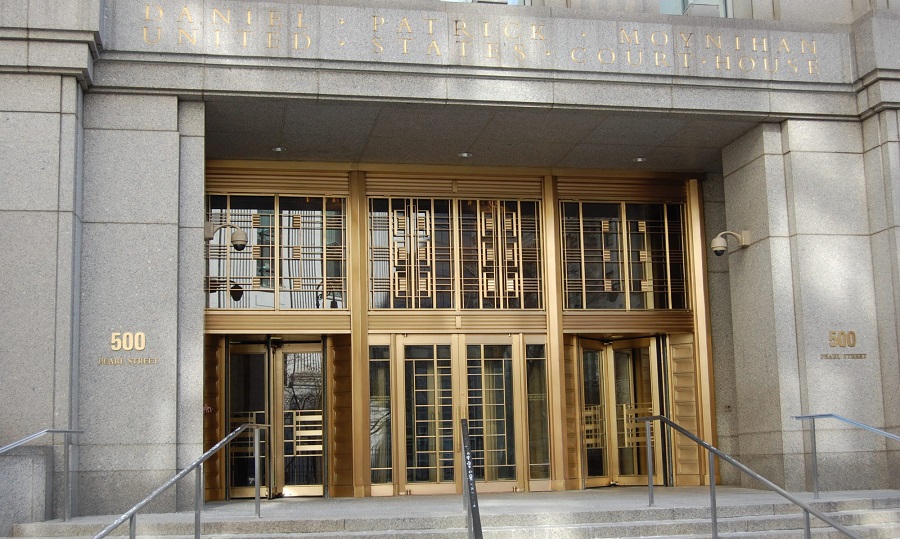
The Southern District of New York is not just another federal court. It is one of the most influential trial courts in the country. It handles major securities cases, complex commercial disputes, white-collar prosecutions, and cross-border litigation.
For corporate lawyers, admission to the SDNY Bar still carries weight.
Tabber Benedict understands this firsthand. A Columbia Law School graduate with over 25 years of experience in mergers and acquisitions, corporate finance, and complex commercial matters, he was recently sworn into the SDNY. His career spans elite firms, federal institutions, and global transactions exceeding $100 billion in aggregate value. His perspective is grounded in both deal-making and courtroom exposure.
“This court has shaped corporate law for decades,” he explains. “When you are admitted here, you are stepping into a forum that defines precedent.”
A Court With Historic Influence
Established Before the Supreme Court
The SDNY was established in 1789. It predates the U.S. Supreme Court. That fact alone signals its importance.
Over time, it became a central venue for financial and corporate litigation. Many major securities cases originate here because Wall Street sits within its jurisdiction.
Corporate counsel cannot ignore it.
Volume and Complexity
The SDNY handles thousands of civil and criminal cases each year. A significant portion involves securities fraud, antitrust claims, bankruptcy proceedings, and international commercial disputes.
According to federal court statistics, the Southern District consistently ranks among the busiest and most complex federal courts in the United States.
Complex cases shape doctrine.
Doctrine shapes corporate behavior.
Why Admission Still Signals Credibility
Readiness for Federal Litigation
Corporate lawyers often focus on transactions. Deals close. Companies grow. Yet disputes happen.
Contracts break. Shareholders sue. Regulators investigate.
Admission to the SDNY Bar signals readiness to operate in federal court when necessary.
Tabber Benedict frames it clearly. “Even if you spend most of your time structuring transactions, you must understand how those agreements would hold up before a federal judge.”
That perspective sharpens drafting.
Enhanced Strategic Thinking
Litigation awareness influences deal design.
Lawyers admitted to SDNY must think beyond negotiation. They must consider evidentiary standards, procedural rules, and judicial expectations.
“This court does not tolerate loose drafting,” Benedict notes. “Ambiguity invites scrutiny.”
Precision becomes habit.
Corporate Practice Meets Federal Standards
Securities and Financial Oversight
Many publicly traded companies operate within SDNY jurisdiction. Securities class actions frequently land there.
Corporate lawyers advising boards must anticipate potential federal exposure.
Understanding SDNY procedure strengthens risk management.
Cross-Border Business Impact
The SDNY often handles international disputes involving multinational corporations. Jurisdiction extends into global commerce.
For lawyers advising lower middle-market businesses, awareness of federal risk matters.
“If your client’s transaction touches New York finance, you must assume federal oversight is possible,” Benedict says. “Preparation protects clients.”
Preparation prevents surprises.
The Practical Value for Modern Lawyers
Immediate Litigation Capability
Admission eliminates delay.
If a dispute arises, counsel can appear directly rather than seeking pro hac vice admission.
Time matters during injunctions and emergency motions.
Federal practice moves fast.
Signaling to Sophisticated Clients
Clients pay attention to credentials.
Admission to SDNY signals competence in high-stakes environments.
Corporate leaders recognize the court’s reputation.
It reflects depth, not marketing.
Lessons for Younger Attorneys
Invest in Federal Court Exposure
Young lawyers often focus narrowly on transactional work.
Exposure to federal court practice broadens perspective.
Read opinions from SDNY judges. Study procedural rules. Attend hearings.
Federal rigor improves drafting discipline.
Build Networks With Experienced Litigators
Tabber Benedict works alongside senior litigators with decades of experience in commercial disputes.
“Clients sometimes require us to step outside pure transactional comfort,” he explains. “Being surrounded by seasoned litigators sharpens your instincts.”
Cross-functional knowledge strengthens strategy.
Data Points That Matter
The SDNY consistently handles high-profile enforcement actions. It plays a major role in securities regulation and corporate compliance oversight.
Federal sentencing guidelines, discovery standards, and motion practice in this district influence national practice patterns.
Corporate attorneys operating in New York finance cannot treat it as optional knowledge.
It shapes precedent.
Precedent shapes markets.
Actionable Recommendations
1. Understand Federal Procedure
Study the Federal Rules of Civil Procedure.
Know motion timelines. Discovery standards. Pleading requirements.
Draft contracts with those standards in mind.
2. Anticipate Litigation When Drafting Deals
Write dispute resolution clauses carefully.
Assume judicial review.
Clarity reduces exposure.
3. Maintain Relationships With Litigators
Transactional lawyers benefit from litigation insight.
Ask how judges interpret ambiguous provisions.
Adjust drafting accordingly.
4. Consider Admission Strategically
If your practice intersects with securities, finance, or cross-border transactions, evaluate federal court admission.
Preparation expands capability.
Why It Still Matters
Modern corporate practice is global. Technology moves fast. Markets evolve.
Federal courts remain steady anchors.
The Southern District of New York carries history and authority. Its rulings influence corporate behavior nationwide.
Tabber Benedict views admission as more than ceremony. “It is a reminder,” he says, “that every agreement we draft could one day stand before a federal judge.”
That awareness improves practice.
It raises standards.
Final Takeaway
Admission to the SDNY Bar still matters.
It signals readiness. It strengthens drafting discipline. It expands strategic thinking.
Corporate lawyers who understand federal scrutiny build stronger deals.
Precision compounds.
The SDNY is not just a court. It is a benchmark.
For serious corporate practitioners, that benchmark still carries weight.